October Newsletter 2026 - Book Selections
2026-10-18
Victoria Mils
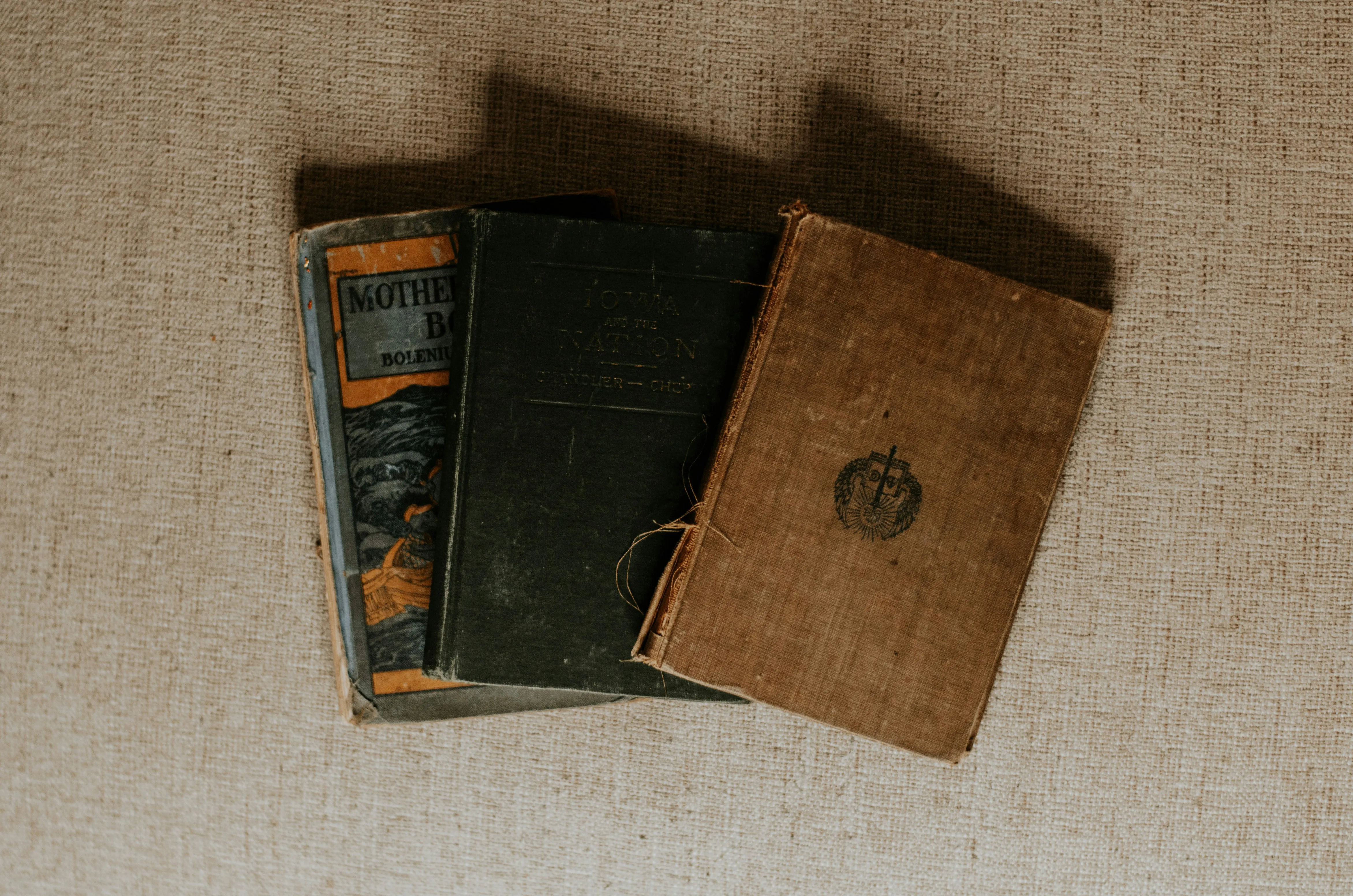
The Art of Being Different - on daydreamers, misfits, and the courage of refusing to become ordinary.
What does it mean to be different? Is it something we choose, something we are born with, or something we discover when the world tells us we don’t quite belong? These three books explore characters who find themselves at odds with the people around them.
Being different sounds like a good thing in theory. We’re often told to be ourselves, think independently, and embrace what makes us unique. But it’s not always that easy when the people around us don’t share our interests or understand the way we think. These three books explore what it means to be different and how people respond when they don’t quite fit in.
1. Anne of Green Gables by L. M. Montgomery
Anne Shirley has always seen the world a little differently. She finds beauty in ordinary places and has an imagination that often gets her into trouble. The people around her don’t always understand her way of thinking, but she gradually learns that she doesn’t need everyone to understand her in order to be happy.
What makes Anne interesting is that she doesn’t simply want to be accepted. She wants to be accepted without having to give up the things that make her who she is. Her story explores the possibility of belonging without losing your individuality.
There is something worth considering here. We often assume that fitting in requires us to become more like the people around us. But what if genuine belonging means finding people who allow us to remain different? Perhaps the goal isn’t to find a place where we fit perfectly. Perhaps it is to find a place where we don’t have to change ourselves just to stay.
2. The Catcher in the Rye by J. D. Salinger
Holden Caulfield sees dishonesty everywhere. He is frustrated by the expectations of adulthood and constantly criticizes people he considers fake. Yet his rejection of the world doesn’t bring him the connection he seems to want. Instead, he becomes increasingly isolated.
Holden raises a difficult question about individuality. How do we remain true to ourselves without defining ourselves entirely through opposition to others? It is possible to spend so much time rejecting what we dislike about the world that we never figure out what we actually believe in.
His story also challenges the idea that being different automatically makes someone more authentic. Holden sees through the behaviour of others, but he doesn’t always understand his own. A thought is that part of growing up is realizing that recognizing other people’s flaws is much easier than confronting our own.
3. Matilda by Roald Dahl
Matilda grows up in a family that has little interest in understanding her. Her intelligence and love of reading are treated as inconveniences rather than qualities worth encouraging. She eventually finds ways to challenge the people who underestimate her instead of accepting their judgment as the truth about herself.
Her story raises an important question about identity: how much power should other people have over the way we see ourselves? When the people closest to us misunderstand us, it can be difficult not to believe them. We often look to others for confirmation of who we are, even when their opinions don’t reflect our actual character.
Matilda shows that being misunderstood doesn’t mean there is something wrong with you. At the same time, her story reminds us that individuality alone isn’t always enough. People also need environments where they can learn, grow, and feel valued. Sometimes the problem isn’t the person who stands out, it’s the world that refuses to make room for them.
& a thought.
The hardest part of being different is that we don’t always know who we would be if we had never felt the need to fit in.
Our personalities develop through our relationships with other people. We adopt expressions from our friends and discover interests through the people we admire. We change our opinions when someone challenges them. Even the things we consider uniquely ours have been shaped by experiences we didn’t choose. So the idea of an entirely independent self is complicated. None of us becomes who we are in isolation.
But if other people have always influenced us, how can we tell the difference between growing as a person and losing ourselves?
Individuality isn’t about remaining unchanged. It is about becoming aware of the ways we change, as there is a difference between discovering that you genuinely enjoy something and pretending to enjoy it because you want to be liked. There is a difference between changing your mind because someone has taught you something and changing it because you are afraid of disagreeing.
Anne, Holden, and Matilda each struggle with this in their own way. Their stories suggest that being different is not necessarily about standing apart from everyone else. It is about learning to understand yourself well enough that other people’s opinions don’t become the only measure of your worth.
That is what makes individuality so difficult. We want to be understood, but we cannot control how others see us. We want to belong, but belonging sometimes asks us to compromise. We want to know who we are, yet we are constantly becoming someone new.
The question isn’t whether we are brave enough to be different, it is whether we can accept that some people will never understand us completely, and choose to be ourselves anyway.
A question to think about: If the way we see ourselves is partly shaped by how others see us, is it ever possible to know who we truly are?
Copyright © 2025 The Inkwell Society. All rights reserved.
Privacy, Copyright, and Submission Policy